
IntelligentDesigns
We engineer systems that monitor, predict, and protect the world's most demanding operations.
Numeric Engineering Inc. is a U.S.-based engineering company that designs and deploys instrumented, edge-intelligent systems for DDIL (Disrupted, Degraded, Intermittent, and Low-Bandwidth) environments. In practical terms, the company measures the behavior of real physical assets, processes that data locally, applies physics-based models and control logic, and converts those results into operational decision support and autonomous system functions.
The Technology
Our full-stack architecture, from sensors to engineered decision support. Click any node to explore.
What We Do
We develop solutions for problems that conventional engineering alone cannot fully address — at the intersection of applied physics, computational modeling, and real-world system performance.
Environmental conditions such as wave height and wave direction are often incomplete, unreliable, or unavailable in live operations.
Physics-based models and machine learning algorithms infer environmental forces from measured vessel motions.
Read Full Analysis →Structural response involves complex interactions between loading, dynamics, and material properties that defy simplified analysis.
Coupled models estimate stress, displacement, and fatigue accumulation in real time — calibrated against measured field data.
Read Full Analysis →Critical parameters such as displacement and alignment often cannot be measured directly due to limited access, sensor survivability, or deployment cost.
Patented computer vision and physics-based inference extract quantitative measurements where traditional sensors cannot be deployed.
Read Full Analysis →High-fidelity engineering models are often too computationally intensive and too disconnected from live data for real-time deployment.
Reduced-order models and machine learning representations convert complex simulations into deployable systems that operate on live data.
Read Full Analysis →Proven Results
Decades of high-stakes engineering. One platform that proves it.
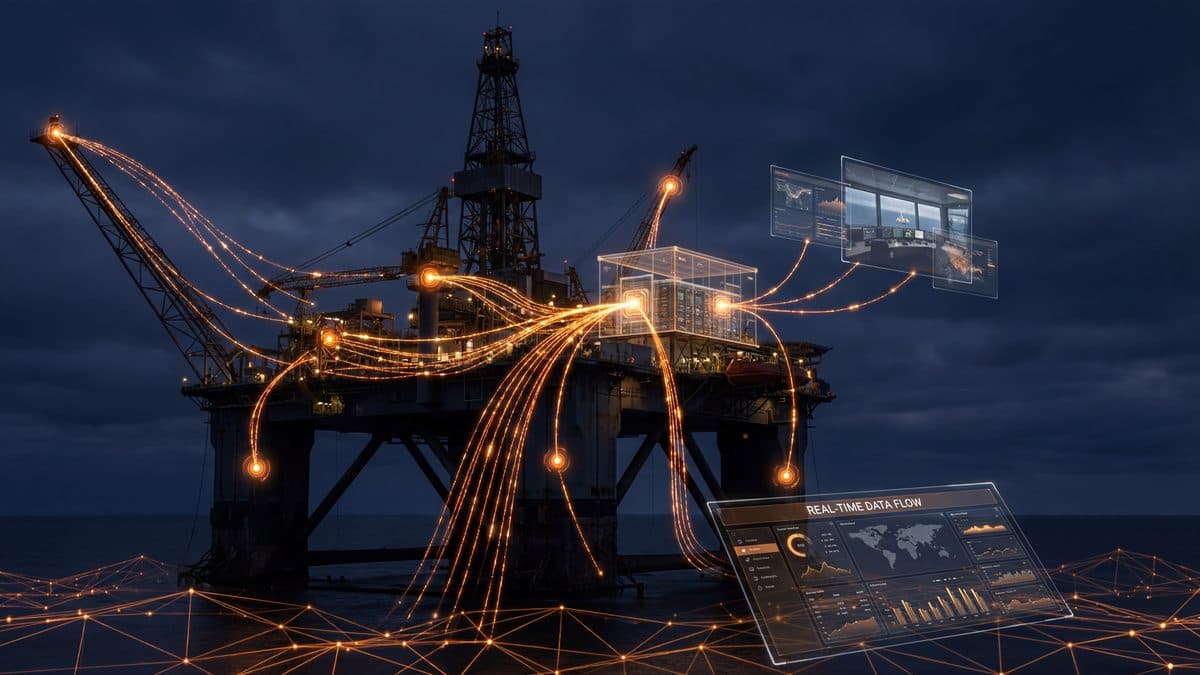
A fully integrated monitoring and intelligence platform deployed on offshore installations. Deep Edge combines Numeric's sensor systems, edge computing, AI models, and patented computer vision into a single unified system — giving operators real-time visibility and predictive insight across their entire operation, without vendor lock-in.
We build deployable engineering systems grounded in physics, data, and real operating conditions.
High-fidelity models are often developed under idealized assumptions that do not fully represent in-service conditions, leading to divergence from observed system behavior. We calibrate models using measured data so that predictions reflect actual system response under operating conditions.
Critical quantities such as environmental forcing and directionality, displacement, and internal state are not always directly measurable. We estimate these variables using physics-based inference informed by available measurements, enabling visibility into system behavior that cannot be instrumented directly.
High-fidelity simulations are not suitable for real-time or embedded execution. We develop reduced-order models that preserve governing behavior while operating on live data within strict compute and latency constraints.
Sensing, modeling, and software are typically developed independently, leading to integration gaps and inconsistent results. We design systems in which data acquisition, computation, and output operate within a single framework, ensuring consistency from measurement through decision support.