← Back to Services
Engineering Intelligence

AI & Machine Learning

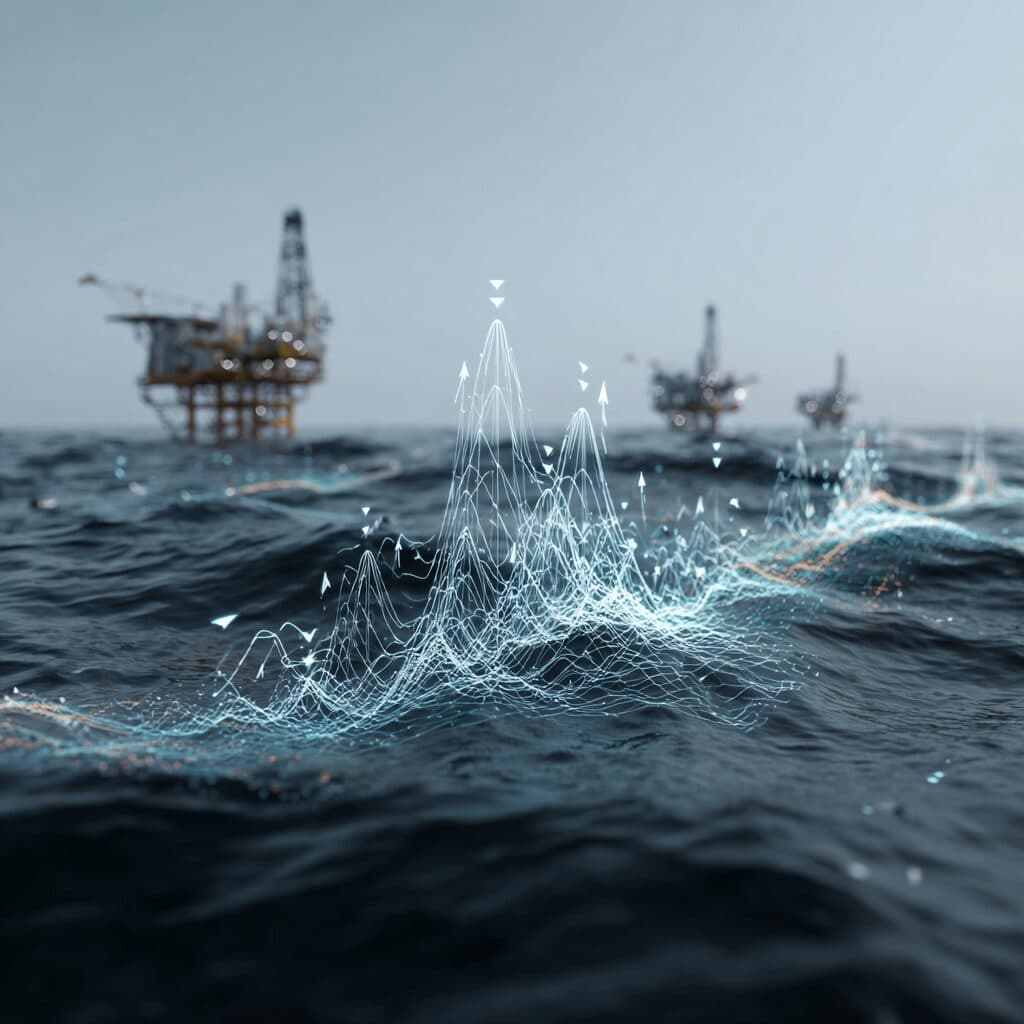
The AI & Machine Learning module comprises physics-informed models used where direct measurement or full real-time simulation is not practical. Numeric combines engineering simulations, operational sensor data, and machine learning to derive environmental force, motion, structural response, and fatigue in systems where the behavior is dynamic, nonlinear, and only partially observable.
Technology Stack
Physics-Based AILSTM NetworksSynthetic DataSensor FusionDigital TwinsPredictive MLTime-Series AnalysisFEA Integration
01

Physics-Informed Engineering AI

Numeric applies AI and machine learning to engineering systems where physical behavior, simulation output, and operational data exceed what conventional analysis alone can handle efficiently. These systems are built around engineering understanding, not separated from it.

Capabilities
  • Physics-informed models for structural behavior and environmental loading
  • Machine learning used to extend engineering analysis, not replace it
  • Strong emphasis on explainability, robustness, and operational trust
  • Models suited to sparse sensing and incomplete measured data
  • Practical deployment in challenging operating environments
AI and machine learning for engineering systems
02

Simulation-Driven Learning

Operational data is often too limited to support robust training on its own. Numeric addresses this by generating synthetic datasets from high-fidelity engineering simulations and using them to develop predictive models across a much broader range of scenarios.

Capabilities
  • Large-scale synthetic data generation from simulation
  • Training datasets spanning varied environmental and operating conditions
  • Reduced dependence on full high-fidelity simulation during live operations
  • Better model coverage for rare or difficult-to-measure scenarios
  • Strong connection between simulation and deployment workflows
Machine learning simulation-driven analysis
03

Sensor Fusion and State Estimation

Numeric develops machine learning pipelines that combine multiple sensor streams to estimate the state of the system more completely than any single measurement source can provide.

Capabilities
  • Fusion of wave radar, gyroscope, accelerometer, GPS, and related inputs
  • Estimation of environmental conditions and directionality
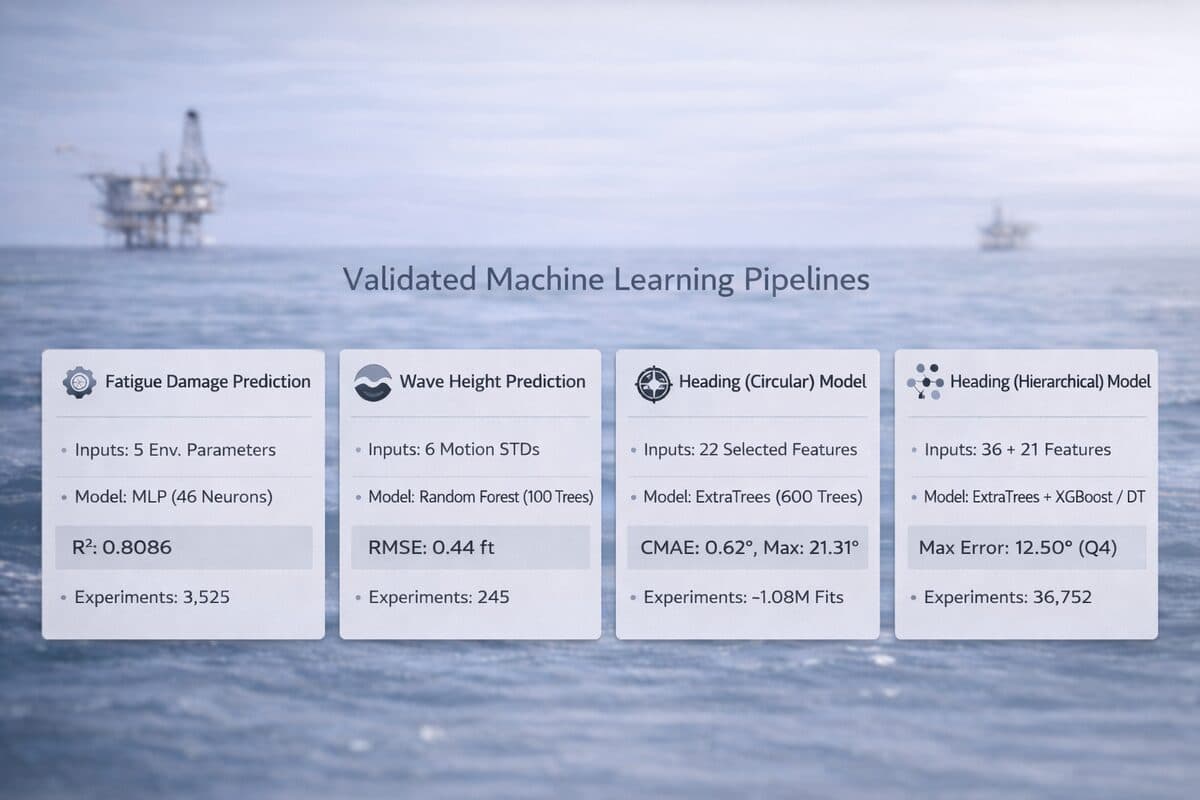
  • Prediction of structural response and fatigue damage rates
  • Time-series analysis of motion and operational data
  • Improved engineering insight from distributed measurements
04

Digital Twins and Operational Models

Machine learning is integrated with physics-based models and live sensor data to support operational digital twins. These systems continuously estimate asset behavior and provide current engineering insight during operations.

Capabilities
  • Continuous estimation of loading, response, and degradation
  • Real-time integration of simulation, sensor data, and ML models
  • Support for monitoring, prediction, and operational decisions
  • Deployment in edge-connected or hybrid environments
  • Structured outputs for engineering and operations teams
05

Applications

Numeric’s AI and machine learning capabilities serve a range of engineering applications.

Capabilities
  • Fatigue accumulation prediction in risers and structural systems
  • Real-time identification of environmental loading conditions
  • Inference of wave conditions from measured motion
  • Fusion of multi-sensor operational data streams
  • Prediction of structural response under changing conditions
Related Case Study

Simulation & Fatigue Monitoring

Predictive fatigue tracking through high-fidelity modeling

View Case Study

Intelligent Designs

Engineered for Real Conditions

Physics. Data. Deployment.

Contact us